Air Quality Monitoring: Assessment and Management – Nicolás A. Mazzeo – 1st Edition
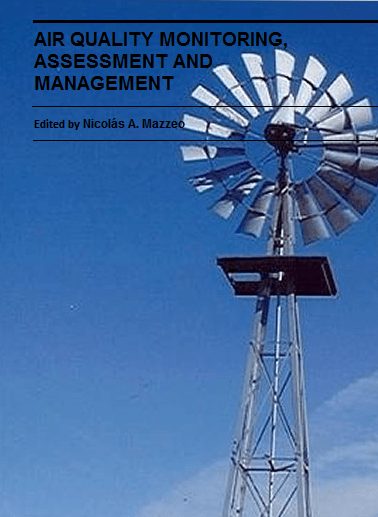
Descripción
Los seres humanos necesitan respirar oxígeno diluido en cierta cantidad de gas inerte para vivir. En la atmósfera, hay una mezcla de gases, principalmente, oxígeno y nitrógeno, en proporciones apropiadas. Sin embargo, el aire también contiene otros gases, vapores y aerosoles que los humanos incorporan al respirar y cuya composición y concentración varían espacialmente.
Algunos de estos son fisiológicamente inertes. La contaminación del aire se ha convertido en un problema de gran preocupación en las últimas décadas, ya que ha causado efectos negativos en la salud humana, la naturaleza y las propiedades.
Este libro presenta los resultados de estudios de investigación realizados por investigadores internacionales en diecisiete capítulos que se pueden agrupar en dos secciones principales:
a$ monitoreo de la calidad del aire yb$ evaluación y gestión de la calidad del aire, y sirve como fuente de material para todos los involucrados en el campo, ya sea como estudiante, investigador científico, industrial, consultor o agencia gubernamental con responsabilidad en esta área.
Chapter 1: Planning Air Pollution Monitoring Networks in Industrial Areas by Means of Remote Sensed Images and GIS Techniques 3 Mauro Rotatori, Rosamaria Salvatori and Roberto Salzano
Chapter 2: Design of Urban Air Quality Monitoring Network: Fuzzy Based Multi-Criteria Decision Making Approach 25 Abdullah Mofarrah, Tahir Husain and Badr H. Alharbi
Chapter 3: Malodor Detection Based on Electronic Nose 41 Teerakiat Kerdcharoen, Chatchawal Wongchoosuk and Panida Lorwongtragool
Part 2
Chapter 4 :Air Quality Assessment and Management
Chapter 5: Characterization of Particles Transmitted by Wind from Waste Dump of Phosphatic Fertilizers Plant Deposited on Biological Sample Surfaces 93 M.I. Szynkowska, A. Pawlaczyk and J. Rogowski
Chapter 6: Role of the Ionic Component and Carbon Fractions in the Fine and Coarse Fractions of Particulate Matter for the Identification of Pollution Sources: Application of Receptor Models 109 Pierina Ielpo, Claudia Marcella Placentino, Isabella Cafagna, Gianluigi de Gennaro, Martino Amodio, Barbara Elisabetta Daresta and Alessia Di Gilio
Chapter 7: Monitoring and Reporting VOCs in Ambient Air Anjali Srivastava and Dipanjali Majumdar
Chapter 8: Estimated Atmospheric Emissions from Mobile Sources and Assessment of Air Quality in an Urban Area
Chapter 9: Applications of Remote Sensing Instruments in Air Quality Monitoring
Chapter 10: The Surveillance of the Air Quality in the Vicinity of an Active Volcano: Case of the Piton de la Fournaise
Chapter 11: Remote Zones Air Quality - Persistent Organic Pollutants: Sources, Sampling and Analysis
Chapter 12: Asian Dust Storm as a Natural Source of Air Pollution in East Asia. its Nature, Aging, and Extinction
Chapter 13: Genetic Biomarkers Applied to Environmental Air Quality: Ecological and Human Health Aspects
Chapter 14: An Evaluation of Atmospheric Aerosols in Kanana, Klerksdorp Gold Mining Town, North-West Province of South Africa Brighton Kaonga and Eno E. Ebenso
Chapter 15: Some Guidelines to Improve Air Quality Management in Santiago, Chile: From Commune to Basin Level
Chapter 16: Multi-Year Assessment of Airborne Metals in Fallon, Nevada, using Leaf-Surface Chemistry
Chapter 17: Organic Compounds in Airborne Particles and their Genotoxic Effects in Mexico City 3
Consulta los datos bibliográficos de esta edición para identificar correctamente el recurso, revisar su autoría y verificar detalles como ISBN, tema, subtema, archivo e idioma.
- Título: Air Quality Monitoring: Assessment and Management
- Autor/es: Nicolás A. Mazzeo
- Edición: 1ra Edición
- Año de publicación: 2011
- Tipo de archivo: eBook
- Idioma: eBook en Inglés
- ISBN-13: 789533073170
- Subtema: Ecología
Citar este libro
Preparando citaciones...



Aún no hay comentarios
Sé el primero en compartir tu opinión sobre este contenido.
Escribir un comentario