College Physics – Paul Peter Urone, Roger Hinrichs – 1st Edition
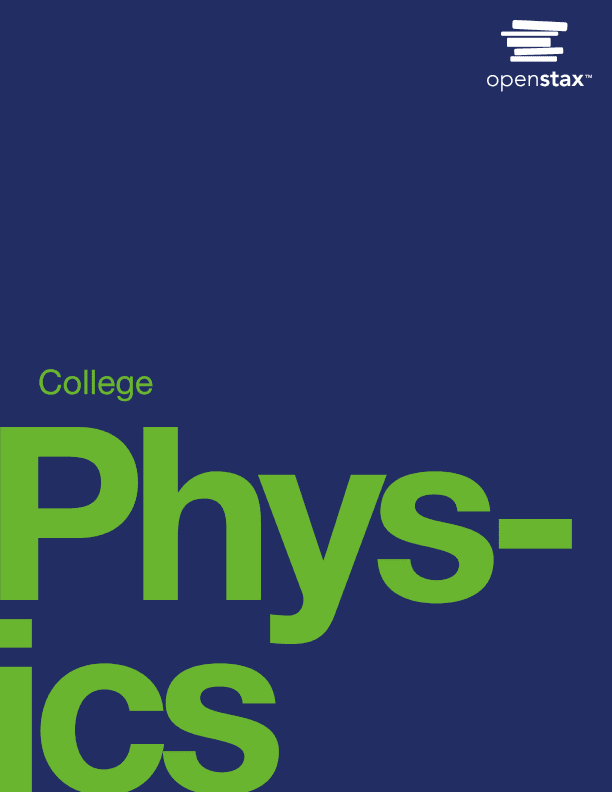
Descripción
Este libro introductorio de álgebra y física, basado en álgebra, contiene una gran cantidad de ejemplos, ilustraciones y explicaciones del mundo real para ayudar a los estudiantes a comprender conceptos clave y fundamentales de la física.
College Physics incluye objetivos de aprendizaje, preguntas conceptuales, enlaces a laboratorios y simulaciones, y amplias oportunidades de práctica para resolver problemas de aplicación de física tradicional. College Physics cumple con el alcance estándar y los requisitos de secuencia para un curso introductorio de física basado en álgebra de dos semestres.
Requiere conocimiento de álgebra y algo de trigonometría, pero no de cálculo. College Physics incluye objetivos de aprendizaje, preguntas de concepto, enlaces a laboratorios y simulaciones, y amplias oportunidades de práctica para problemas de aplicación de física tradicional.
Este libro está escrito para usted. Se basa en la experiencia docente e investigadora de numerosos físicos y está influenciada por un fuerte recuerdo de Sus propias luchas como estudiantes. Después de leer este libro, esperamos que vea que la física es visible en todas partes. Las aplicaciones van desde conducir un coche hasta lanzar un cohete, desde un patinador que gira sobre hielo hasta una estrella de neutrones que gira en el espacio, y desde tomar la temperatura hasta tomar una radiografía de tórax.
Preface
1. Introduction: The Nature of Science and Physics
Connection for AP® Courses
1.1. Physics: An Introduction
1.2. Physical Quantities and Units
1.3. Accuracy, Precision, and Significant Figures
1.4. Approximation
1.5. Glossary
1.6. Section Summary
1.7. Conceptual Questions
1.8. Problems & Exercises
2. Kinematics
Connection for AP® Courses
2.1. Displacement
2.2. Vectors, Scalars, and Coordinate Systems
2.3. Time, Velocity, and Speed
2.4. Acceleration
2.5. Motion Equations for Constant Acceleration in One Dimension
2.6. Problem-Solving Basics for One Dimensional Kinematics
2.7. Falling Objects
2.8. Graphical Analysis of One Dimensional Motion
2.9. Glossary
2.10. Section Summary
2.11. Conceptual Questions
2.12. Problems & Exercises
2.13. Test Prep for AP® Courses
3. Two-Dimensional Kinematics
Connection for AP® Courses
3.1. Kinematics in Two Dimensions: An Introduction
3.2. Vector Addition and Subtraction: Graphical Methods
3.3. Vector Addition and Subtraction: Analytical Methods
3.4. Projectile Motion
3.5. Addition of Velocities
3.6. Glossary
3.7. Section Summary
3.8. Conceptual Questions
3.9. Problems & Exercises
3.10. Test Prep for AP® Courses
4. Dynamics: Force and Newton's Laws of Motion
Connection for AP® Courses
4.1. Development of Force Concept
4.2. Newton's First Law of Motion: Inertia
4.3. Newton's Second Law of Motion: Concept of a System
4.4. Newton's Third Law of Motion: Symmetry in Forces
4.5. Normal, Tension, and Other Examples of Force
4.6. Problem-Solving Strategies
4.7. Further Applications of Newton's Laws of Motion
4.8. Extended Topic: The Four Basic Forces—An Introduction
4.9. Glossary
4.10. Section Summary
4.11. Conceptual Questions
4.12. Problems & Exercises
4.13. Test Prep for AP® Courses
5. Further Applications of Newton's Laws: Friction, Drag, and Elasticity
Connection for AP® Courses
5.1. Friction
5.2. Drag Forces
5.3. Elasticity: Stress and Strain
5.4. Glossary
5.5. Section Summary
5.6. Conceptual Questions
5.7. Problems & Exercises
5.8. Test Prep for AP® Courses
6. Gravitation and Uniform Circular Motion
Connection for AP® Courses
6.1. Rotation Angle and Angular Velocity
6.2. Centripetal Acceleration
6.3. Centripetal Force
6.4. Fictitious Forces and Non-inertial Frames: The Coriolis Force
6.5. Newton's Universal Law of Gravitation
6.6. Satellites and Kepler's Laws: An Argument for Simplicity
6.7. Glossary
6.8. Section Summary
6.9. Conceptual Questions
6.10. Problems & Exercises
6.11. Test Prep for AP® Courses
7. Work, Energy, and Energy Resources
Connection for AP® Courses
7.1. Work: The Scientific Definition
7.2. Kinetic Energy and the Work-Energy Theorem
7.3. Gravitational Potential Energy
7.4. Conservative Forces and Potential Energy
7.5. Nonconservative Forces
7.6. Conservation of Energy
7.7. Power
7.8. Work, Energy, and Power in Humans
7.9. World Energy Use
7.10. Glossary
7.11. Section Summary
7.12. Conceptual Questions
7.13. Problems & Exercises
7.14. Test Prep for AP® Courses
8. Linear Momentum and Collisions
Connection for AP® courses
8.1. Linear Momentum and Force
8.2. Impulse
8.3. Conservation of Momentum
8.4. Elastic Collisions in One Dimension
8.5. Inelastic Collisions in One Dimension
8.6. Collisions of Point Masses in Two Dimensions
8.7. Introduction to Rocket Propulsion
8.8. Glossary
8.9. Section Summary
8.10. Conceptual Questions
8.11. Problems & Exercises
8.12. Test Prep for AP® Courses
9. Statics and Torque
Connection for AP® Courses
9.1. The First Condition for Equilibrium
9.2. The Second Condition for Equilibrium
9.3. Stability
9.4. Applications of Statics, Including Problem-Solving Strategies
9.5. Simple Machines
9.6. Forces and Torques in Muscles and Joints
9.7. Glossary
9.8. Section Summary
9.9. Conceptual Questions
9.10. Problems & Exercises
9.11. Test Prep for AP® Courses
10. Rotational Motion and Angular Momentum
Connection for AP® Courses
10.1. Angular Acceleration
10.2. Kinematics of Rotational Motion
10.3. Dynamics of Rotational Motion: Rotational Inertia
10.4. Rotational Kinetic Energy: Work and Energy Revisited
10.5. Angular Momentum and Its Conservation
10.6. Collisions of Extended Bodies in Two Dimensions
10.7. Gyroscopic Effects: Vector Aspects of Angular Momentum
10.8. Glossary
10.9. Section Summary
10.10. Conceptual Questions
10.11. Problems & Exercises
10.12. Test Prep for AP® Courses
11. Fluid Statics
Connection for AP® Courses
11.1. What Is a Fluid?
11.2. Density
11.3. Pressure
11.4. Variation of Pressure with Depth in a Fluid
11.5. Pascal's Principle
11.6. Gauge Pressure, Absolute Pressure, and Pressure Measurement
11.7. Archimedes' Principle
11.8. Cohesion and Adhesion in Liquids: Surface Tension and Capillary Action
11.9. Pressures in the Body
11.10. Glossary
11.11. Section Summary
11.12. Conceptual Questions
11.13. Problems & Exercises
11.14. Test Prep for AP® Courses
12. Fluid Dynamics and Its Biological and Medical Applications
Connection for AP® Courses
12.1. Flow Rate and Its Relation to Velocity
12.2. Bernoulli's Equation
12.3. The Most General Applications of Bernoulli's Equation
12.4. Viscosity and Laminar Flow; Poiseuille's Law
12.5. The Onset of Turbulence
12.6. Motion of an Object in a Viscous Fluid
12.7. Molecular Transport Phenomena: Diffusion, Osmosis, and Related Processes
12.8. Glossary
12.9. Section Summary
12.10. Conceptual Questions
12.11. Problems & Exercises
12.12. Test Prep for AP® Courses
13. Temperature, Kinetic Theory, and the Gas Laws
Connection for AP® Courses
13.1. Temperature
13.2. Thermal Expansion of Solids and Liquids
13.3. The Ideal Gas Law
13.4. Kinetic Theory: Atomic and Molecular Explanation of Pressure and Temperature
13.5. Phase Changes
13.6. Humidity, Evaporation, and Boiling
13.7. Glossary
13.8. Section Summary
13.9. Conceptual Questions
13.10. Problems & Exercises
13.11. Test Prep for AP® Courses
14. Heat and Heat Transfer Methods
Connection for AP® Courses
14.1. Heat
14.2. Temperature Change and Heat Capacity
14.3. Phase Change and Latent Heat
14.4. Heat Transfer Methods
14.5. Conduction
14.6. Convection
14.7. Radiation
14.8. Glossary
14.9. Section Summary
14.10. Conceptual Questions
14.11. Problems & Exercises
14.12. Test Prep for AP® Courses
15. Thermodynamics
Connection for AP® Courses
15.1. The First Law of Thermodynamics
15.2. The First Law of Thermodynamics and Some Simple Processes
15.3. Introduction to the Second Law of Thermodynamics: Heat Engines and Their Efficiency
15.4. Carnot's Perfect Heat Engine: The Second Law of Thermodynamics Restated
15.5. Applications of Thermodynamics: Heat Pumps and Refrigerators
15.6. Entropy and the Second Law of Thermodynamics: Disorder and the Unavailability of Energy
15.7. Statistical Interpretation of Entropy and the Second Law of Thermodynamics: The Underlying Explanation
15.8. Glossary
15.9. Section Summary
15.10. Conceptual Questions
15.11. Problems & Exercises
15.12. Test Prep for AP® Courses
16. Oscillatory Motion and Waves
Connection for AP® Courses
16.1. Hooke's Law: Stress and Strain Revisited
16.2. Period and Frequency in Oscillations
16.3. Simple Harmonic Motion: A Special Periodic Motion
16.4. The Simple Pendulum
16.5. Energy and the Simple Harmonic Oscillator
16.6. Uniform Circular Motion and Simple Harmonic Motion
16.7. Damped Harmonic Motion
16.8. Forced Oscillations and Resonance
16.9. Waves
16.10. Superposition and Interference
16.11. Energy in Waves: Intensity
16.12. Glossary
16.13. Section Summary
16.14. Conceptual Questions
16.15. Problems & Exercises
16.16. Test Prep for AP® Courses
17. Physics of Hearing
Connection for AP® Courses
17.1. Sound
17.2. Speed of Sound, Frequency, and Wavelength
17.3. Sound Intensity and Sound Level
17.4. Doppler Effect and Sonic Booms
17.5. Sound Interference and Resonance: Standing Waves in Air Columns
17.6. Hearing
17.7. Ultrasound
17.8. Glossary
17.9. Section Summary
17.10. Conceptual Questions
17.11. Problems & Exercises
17.12. Test Prep for AP® Courses
18. Electric Charge and Electric Field
Connection for AP® Courses
18.1. Static Electricity and Charge: Conservation of Charge
18.2. Conductors and Insulators
18.3. Conductors and Electric Fields in Static Equilibrium
18.4. Coulomb's Law
18.5. Electric Field: Concept of a Field Revisited
18.6. Electric Field Lines: Multiple Charges
18.7. Electric Forces in Biology
18.8. Applications of Electrostatics
18.9. Glossary
18.10. Section Summary
18.11. Conceptual Questions
18.12. Problems & Exercises
18.13. Test Prep for AP® Courses
19. Electric Potential and Electric Field
Connection for AP® Courses
19.1. Electric Potential Energy: Potential Difference
19.2. Electric Potential in a Uniform Electric Field
19.3. Electrical Potential Due to a Point Charge
19.4. Equipotential Lines
19.5. Capacitors and Dielectrics
19.6. Capacitors in Series and Parallel
19.7. Energy Stored in Capacitors
19.8. Glossary
19.9. Section Summary
19.10. Conceptual Questions
19.11. Problems & Exercises
19.12. Test Prep for AP® Courses
20. Electric Current, Resistance, and Ohm's Law
Connection for AP® Courses
20.1. Current
20.2. Ohm's Law: Resistance and Simple Circuits
20.3. Resistance and Resistivity
20.4. Electric Power and Energy
20.5. Alternating Current versus Direct Current
20.6. Electric Hazards and the Human Body
20.7. Nerve Conduction–Electrocardiograms
20.8. Glossary
20.9. Section Summary
20.10. Conceptual Questions
20.11. Problems & Exercises
20.12. Test Prep for AP® Courses
21. Circuits, Bioelectricity, and DC Instruments
Connection for AP® Courses
21.1. Resistors in Series and Parallel
21.2. Electromotive Force: Terminal Voltage
21.3. Kirchhoff's Rules
21.4. DC Voltmeters and Ammeters
21.5. Null Measurements
21.6. DC Circuits Containing Resistors and Capacitors
21.7. Glossary
21.8. Section Summary
21.9. Conceptual Questions
21.10. Problems & Exercises
21.11. Test Prep for AP® Courses
22. Magnetism
Connection for AP® Courses
22.1. Magnets
22.2. Ferromagnets and Electromagnets
22.3. Magnetic Fields and Magnetic Field Lines
22.4. Magnetic Field Strength: Force on a Moving Charge in a Magnetic Field
22.5. Force on a Moving Charge in a Magnetic Field: Examples and Applications
22.6. The Hall Effect
22.7. Magnetic Force on a Current-Carrying Conductor
22.8. Torque on a Current Loop: Motors and Meters
22.9. Magnetic Fields Produced by Currents: Ampere's Law
22.10. Magnetic Force between Two Parallel Conductors
22.11. More Applications of Magnetism
22.12. Glossary
22.13. Section Summary
22.14. Conceptual Questions
22.15. Problems & Exercises
22.16. Test Prep for AP® Courses
23. Electromagnetic Induction, AC Circuits, and Electrical Technologies
Connection for AP® Courses
23.1. Induced Emf and Magnetic Flux
23.2. Faraday's Law of Induction: Lenz's Law
23.3. Motional Emf
23.4. Eddy Currents and Magnetic Damping
23.5. Electric Generators
23.6. Back Emf
23.7. Transformers
23.8. Electrical Safety: Systems and Devices
23.9. Inductance
23.10. RL Circuits
23.11. Reactance, Inductive and Capacitive
23.12. RLC Series AC Circuits
23.13. Glossary
23.14. Section Summary
23.15. Conceptual Questions
23.16. Problems & Exercises
23.17. Test Prep for AP® Courses
24. Electromagnetic Waves
Connection for AP® Courses
24.1. Maxwell's Equations: Electromagnetic Waves Predicted and Observed
24.2. Production of Electromagnetic Waves
24.3. The Electromagnetic Spectrum
24.4. Energy in Electromagnetic Waves
24.5. Glossary
24.6. Section Summary
24.7. Conceptual Questions
24.8. Problems & Exercises
24.9. Test Prep for AP® Courses
25. Geometric Optics
Connection for AP® Courses
25.1. The Ray Aspect of Light
25.2. The Law of Reflection
25.3. The Law of Refraction
25.4. Total Internal Reflection
25.5. Dispersion: The Rainbow and Prisms
25.6. Image Formation by Lenses
25.7. Image Formation by Mirrors
25.8. Glossary
25.9. Section Summary
25.10. Conceptual Questions
25.11. Problems & Exercises
25.12. Test Prep for AP® Courses
26. Vision and Optical Instruments
Connection for AP® Courses
26.1. Physics of the Eye
26.2. Vision Correction
26.3. Color and Color Vision
26.4. Microscopes
26.5. Telescopes
26.6. Aberrations
26.7. Glossary
26.8. Section Summary
26.9. Conceptual Questions
26.10. Problems & Exercises
26.11. Test Prep for AP® Courses
27. Wave Optics
Connection for AP® Courses
27.1. The Wave Aspect of Light: Interference
27.2. Huygens's Principle: Diffraction
27.3. Young's Double Slit Experiment
27.4. Multiple Slit Diffraction
27.5. Single Slit Diffraction
27.6. Limits of Resolution: The Rayleigh Criterion
27.7. Thin Film Interference
27.8. Polarization
27.9. *Extended Topic* Microscopy Enhanced by the Wave Characteristics of Light
27.10. Glossary
27.11. Section Summary
27.12. Conceptual Questions
27.13. Problems & Exercises
27.14. Test Prep for AP® Courses
28. Special Relativity
Connection for AP® Courses
28.1. Einstein's Postulates
28.2. Simultaneity And Time Dilation
28.3. Length Contraction
28.4. Relativistic Addition of Velocities
28.5. Relativistic Momentum
28.6. Relativistic Energy
28.7. Glossary
28.8. Section Summary
28.9. Conceptual Questions
28.10. Problems & Exercises
28.11. Test Prep for AP® Courses
29. Introduction to Quantum Physics
Connection for AP® Courses
29.1. Quantization of Energy
29.2. The Photoelectric Effect
29.3. Photon Energies and the Electromagnetic Spectrum
29.4. Photon Momentum
29.5. The Particle-Wave Duality
29.6. The Wave Nature of Matter
29.7. Probability: The Heisenberg Uncertainty Principle
29.8. The Particle-Wave Duality Reviewed
29.9. Glossary
29.10. Section Summary
29.11. Conceptual Questions
29.12. Problems & Exercises
29.13. Test Prep for AP® Courses
30. Atomic Physics
Connection for AP® Courses
30.1. Discovery of the Atom
30.2. Discovery of the Parts of the Atom: Electrons and Nuclei
30.3. Bohr's Theory of the Hydrogen Atom
30.4. X Rays: Atomic Origins and Applications
30.5. Applications of Atomic Excitations and De-Excitations
30.6. The Wave Nature of Matter Causes Quantization
30.7. Patterns in Spectra Reveal More Quantization
30.8. Quantum Numbers and Rules
30.9. The Pauli Exclusion Principle
30.10. Glossary
30.11. Section Summary
30.12. Conceptual Questions
30.13. Problems & Exercises
30.14. Test Prep for AP® Courses
31. Radioactivity and Nuclear Physics
Connection for AP® Courses
31.1. Nuclear Radioactivity
31.2. Radiation Detection and Detectors
31.3. Substructure of the Nucleus
31.4. Nuclear Decay and Conservation Laws
31.5. Half-Life and Activity
31.6. Binding Energy
31.7. Tunneling
31.8. Glossary
31.9. Section Summary
31.10. Conceptual Questions
31.11. Problems & Exercises
31.12. Test Prep for AP® Courses
32. Medical Applications of Nuclear Physics
Connection for AP® Courses
32.1. Medical Imaging and Diagnostics
32.2. Biological Effects of Ionizing Radiation
32.3. Therapeutic Uses of Ionizing Radiation
32.4. Food Irradiation
32.5. Fusion
32.6. Fission
32.7. Nuclear Weapons
32.8. Glossary
32.9. Section Summary
32.10. Conceptual Questions
32.11. Problems & Exercises
32.12. Test Prep for AP® Courses
33. Particle Physics
Connection for AP® Courses
33.1. The Yukawa Particle and the Heisenberg Uncertainty Principle Revisited
33.2. The Four Basic Forces
33.3. Accelerators Create Matter from Energy
33.4. Particles, Patterns, and Conservation Laws
33.5. Quarks: Is That All There Is?
33.6. GUTs: The Unification of Forces
33.7. Glossary
33.8. Section Summary
33.9. Conceptual Questions
33.10. Problems & Exercises
33.11. Test Prep for AP® Courses
34. Frontiers of Physics
Connection for AP® Courses
34.1. Cosmology and Particle Physics
34.2. General Relativity and Quantum Gravity
34.3. Superstrings
34.4. Dark Matter and Closure
34.5. Complexity and Chaos
34.6. High-Temperature Superconductors
34.7. Some Questions We Know to Ask
34.8. Glossary
34.9. Section Summary
34.10. Conceptual Questions
34.11. Problems & Exercises
Atomic Masses
Selected Radioactive Isotopes
Useful Information
Glossary of Key Symbols and Notation
Answer Key
Index
Consulta los datos bibliográficos de esta edición para identificar correctamente el recurso, revisar su autoría y verificar detalles como ISBN, tema, subtema, archivo e idioma.
- Título: College Physics
- Autor/es: Paul Peter Urone | Roger Hinrichs
- Edición: 1ra Edición
- Año de publicación: 2012
- Tipo de archivo: eBook
- Idioma: eBook en Inglés
- Editorial: XanEdu Publishing Inc
- Páginas: 1272
- ISBN-10: 1938168003
- ISBN-13: 9781938168000
- Subtema: Física Universitaria
Citar este libro
Preparando citaciones...







Aún no hay comentarios
Sé el primero en compartir tu opinión sobre este contenido.
Escribir un comentario