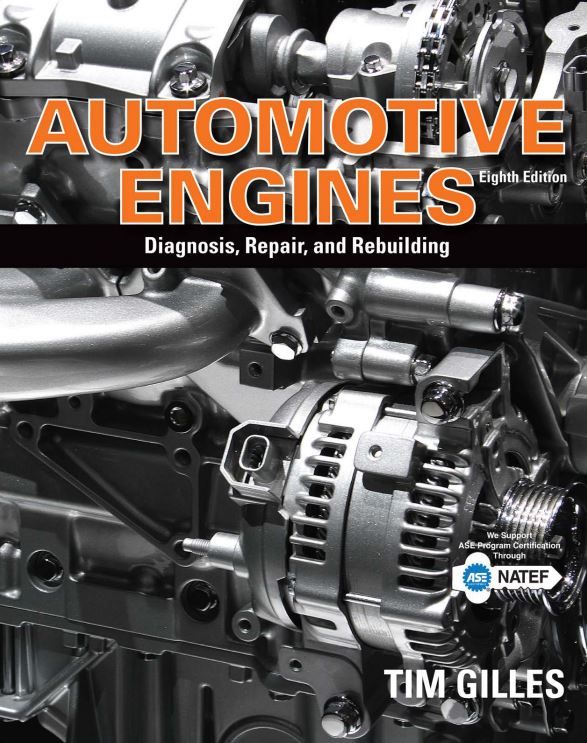
Automotive Engines: Diagnosis Repair and Rebuilding – Tim Gilles – 8th Edition
Descripción
Este texto es una guía completa para entender el motor de combustión interna automotriz en tres fases principales: diagnóstico, reparación y reconstrucción. Está orientado a estudiantes de educación técnica, ingeniería automotriz, o mecánica automotriz, así como a jóvenes profesionales del taller que desean adquirir tanto la teoría como la práctica basada en escenarios reales. Arranca explicando los principios fundamentales del motor: su funcionamiento interno, los ciclos térmicos, el análisis de fallos comunes, la geometría del motor, sus sistemas de lubricación, refrigeración, admisión, escape y los efectos de desgaste y fallo. Luego sigue con el diagnóstico: cómo detectar problemas comunes mediante pruebas de compresión, pruebas de fugas, análisis de aceite, resonancias, vibraciones y fallos por desgaste o daño. Se describen técnicas de inspección, herramientas de medición, y recomendaciones de seguridad y buenas prácticas de taller.
La reparación se aborda tanto desde el taller como desde el taller de máquinas: desmontaje, clasificación de piezas, verificación de tolerancias, rectificación del bloque, culata y cigüeñal, instalación de componentes nuevos, alineado, ajuste de torque y puesta en servicio. El libro también dedica capítulos a la reconstrucción completa: rediseño del bloque, modificación de relaciones de compresión, uso de componentes de alto rendimiento, así como la recalibración de mapas de motor y puesta a punto final. Para estudiantes universitarios o técnicos jóvenes, este libro es muy útil porque combina teoría, práctica, casos reales y herramientas de diagnóstico moderno (incluyendo inyección directa, motores turbo, etc.). Además, presta especial atención al mantenimiento preventivo, fiabilidad, tiempos de parada, coste de reparación y sostenibilidad del motor. Es un texto aplicable al mundo del taller contemporáneo, lo cual lo hace relevante incluso en la era de la electrificación (aunque centrado en motores de combustión).Este texto es una guía completa para entender el motor de combustión interna automotriz en tres fases principales: diagnóstico, reparación y reconstrucción.
Está orientado a estudiantes de educación técnica, ingeniería automotriz, o mecánica automotriz, así como a jóvenes profesionales del taller que desean adquirir tanto la teoría como la práctica basada en escenarios reales. Arranca explicando los principios fundamentales del motor: su funcionamiento interno, los ciclos térmicos, el análisis de fallos comunes, la geometría del motor, sus sistemas de lubricación, refrigeración, admisión, escape y los efectos de desgaste y fallo. Luego sigue con el diagnóstico: cómo detectar problemas comunes mediante pruebas de compresión, pruebas de fugas, análisis de aceite, resonancias, vibraciones y fallos por desgaste o daño. Se describen técnicas de inspección, herramientas de medición, y recomendaciones de seguridad y buenas prácticas de taller. La reparación se aborda tanto desde el taller como desde el taller de máquinas: desmontaje, clasificación de piezas, verificación de tolerancias, rectificación del bloque, culata y cigüeñal, instalación de componentes nuevos, alineado, ajuste de torque y puesta en servicio.
El libro también dedica capítulos a la reconstrucción completa: rediseño del bloque, modificación de relaciones de compresión, uso de componentes de alto rendimiento, así como la recalibración de mapas de motor y puesta a punto final. Para estudiantes universitarios o técnicos jóvenes, este libro es muy útil porque combina teoría, práctica, casos reales y herramientas de diagnóstico moderno (incluyendo inyección directa, motores turbo, etc.). Además, presta especial atención al mantenimiento preventivo, fiabilidad, tiempos de parada, coste de reparación y sostenibilidad del motor. Es un texto aplicable al mundo del taller contemporáneo, lo cual lo hace relevante incluso en la era de la electrificación (aunque centrado en motores de combustión).
Cover
Contents
Preface
Features of the Text
About the Author
ASE Certification Tests
Acknowledgments
Section 1: Engine Construction, Diagnosis, Disassembly, and Inspection
- Chapter 1: Engine Operation
- Introduction
- Simple Engine
- Four-Stroke Engine Operation
- Cylinder Arrangement
- Valvetrain
- Cylinder Block
- Front-Wheel Drive
- Engine Classifications
- Combustion Chamber Designs
- Direction of Crankshaft Rotation
- Firing Order
- Engine Cooling
- Spark and Compression Ignition
- Putting It All Together
- High-Performance Engine Trivia
- Key Terms
- Study Questions
- ASE-Style Review Questions
- Chapter 2: Engine Shop Safety
- Introduction
- General Shop Health and Safety
- Shop Cleanliness
- Fire Prevention
- Tool and Equipment Safety
- Lifting Equipment
- Other Shop Equipment Safety
- Cautions with Caustic Bases
- Hazardous Materials and Environmental Safety
- Hazard Communication Standards
- Safety Data Sheets
- Hazardous Materials Common to the Automotive Industry
- Cleaning Solvent Safety Precautions
- Skin Care Safety Precautions
- Breathing Safety
- Key Terms
- Study Questions
- ASE-Style Review Questions
- Chapter 3: Diagnosing Engine Problems
- Introduction
- Diagnosing Problems before a Repair
- Oil Consumption
- Oil Leaks
- Fuel Mixture Problems
- Compression Loss
- Engine Noises
- Oil Pressure Problems
- Cooling System Problems
- Electronic Failures/Engine Damage
- Key Terms
- Study Questions
- ASE-Style Review Questions
- Chapter 4: Engine Removal, Disassembly, Inspection, and In-Chassis Repairs
- Introduction
- Service Information
- Service Literature
- Service Records
- Engine Removal
- Front-Wheel Drive Engine and Transaxle Removal
- Rebuild or Replace?
- Engine Disassembly
- Ordering Parts
- Major Engine Repair-Engine in the Vehicle
- Key Terms
- Study Questions
- ASE-Style Review Questions
- Chapter 5: Cleaning the Engine
- Introduction
- Cleaning Methods
- Cleaning the Inside of the Engine
- Key Terms
- Study Questions
- ASE-Style Review Questions
- Chapter 6: Measuring
- Introduction
- Metric System
- Measuring Tools
- Precision Measuring Tools
- Key Terms
- Study Questions
- ASE-Style Review Questions
- Micrometer Practice
Section 2: The Breathing System
- Chapter 7: Cylinder Head: Parts and Service
- Introduction
- Cylinder Heads
- Head Identification
- Head Disassembly
- Carbon Removal
- Crack Inspection
- Crack Repair
- Valve Guide Inspection
- Valve Guide Repair
- Reaming Valve Guides
- Valve Guides and Seals
- Resurfacing Heads
- Key Terms
- Study Questions
- ASE-Style Review Questions
- Chapter 8: Cylinder Head: Springs, Valves, and Valve Seats
- Introduction
- Generic Specifications and Guidelines
- Valve Springs
- Pushrods
- Rocker Arms
- Valves and Valve Service
- Valve Seats and Service
- Reassembling the Head
- Key Terms
- Study Questions
- ASE-Style Review Questions
- Chapter 9: Camshafts, Lifters, Timing Belts, and Chains
- Introduction
- Camshaft
- Controlling Camshaft End Thrust
- Valve Lash (Clearance)
- Valve Lifters
- Hydraulic Lifters and Lash Adjusters
- Hydraulic Lifter Operation
- Valve Timing
- Roller Cam and Lifters
- Cam Drives
- Timing Chains and Belts
- Timing the Cam to the Crank
- Timing Belts
- Timing Belt Replacement
- Key Terms
- Study Questions
- ASE-Style Review Questions
Section 3: Cylinder Block Assembly
- Chapter 10: Cylinder Block: Inspection and Service
- Introduction
- Cleaning the Block
- Oil and Water Plugs
- Oil Jet Cooling
- Aligning Dowels on the Back of the Block
- Main Bearing Caps and Registers
- Main Bearing Bore Alignment
- Decking the Block
- Inspecting Cylinder Bores
- Deglazing Cylinders
- Reboring Cylinders
- Honing Cylinders to Size
- Chamfering the Cylinder
- Cylinder Sleeves
- Lifter Bores
- Final Block Preparation
- Cam Bearings
- Key Terms
- Study Questions
- ASE-Style Review Questions
- Chapter 11: Crankshaft, Bearings, and Engine Balancing
- Introduction
- Crankshaft Design
- Crankshaft End Thrust
- Checking Crankshaft Condition
- Other Crankshaft Modifications
- Checking Bearing Clearance
- Crankshaft Design and Engine Balance
- Engine Balancing
- Key Terms
- Study Questions
- ASE-Style Review Questions
- Chapter 12: Pistons, Rings, and Connecting Rods
- Introduction
- Pistons
- Piston Rings
- Piston Pins
- Connecting Rods
- Key Terms
- Study Questions
- ASE-Style Review Questions
- Chapter 13: Lubrication
- Introduction
- Oil Pressure
- Oil
- Engine Oil
- Engine Oil Licensing and Certification
- Oil Additives
- Changing Engine Oil
- Oil Pumps
- Priming the Lubrication System
- Oil Filter
- Replacing the Oil Filter
- Crankcase Ventilation
- Key Terms
- Study Questions
- ASE-Style Review Questions
- Chapter 14: Cooling System
- Introduction
- Types of Cooling Systems
- Cooling System Parts
- Cooling System Circulation
- Coolant Pump
- Accessory Belts
- Thermostat
- Thermostat Bypass
- Radiators
- Cooling System Pressure
- Radiator Fan
- Coolant
- Coolant Service
- Key Terms
- Study Questions
- ASE-Style Review Questions
Section 4: Engine Repair and Reassembly
- Chapter 15: Engine Hardware: Fasteners, Thread Repair, and Gaskets
- Introduction
- Characteristics of Fasteners
- Bolt Stretch
- Torque and Friction
- Drill Bits
- Taps, Threads, and Dies
- Repairing Broken Fasteners and Damaged Threads
- Automotive Tubing Repair
- Gaskets
- Gasket Sealers
- Seals
- Key Terms
- Study Questions
- ASE-Style Review Questions
- Chapter 16: Reassembly and Starting
- Introduction
- Warranty
- Reassembly
- Completion of Assembly
- Engine Installation
- Ignition System Installation and Timing
- Engine Starting and Break-In
- Final Inspection and Cleaning
- Key Terms
- Study Questions
- ASE-Style Review Questions
Section 5: Engine Power and Performance
- Chapter 17: Engine Breathing: Intake and Exhaust Systems
- Introduction
- Intake Manifolds
- Plastic Intake Manifolds
- Cylinder Head Modifications to Improve Airflow
- Exhaust Systems
- Key Terms
- Study Questions
- ASE-Style Review Questions
- Chapter 18: Turbochargers and Superchargers
- Introduction
- Supercharging and Engine Power
- Aftercooler/Intercooler
- Belt-Driven Superchargers/Blowers
- Key Terms
- Study Questions
- ASE-Style Review Questions
- Chapter 19: Producing Power: Valve Timing, Power, and Torque Measurement
- Introduction
- Camshaft and Engine Performance
- Checking Camshaft Timing
- Camshaft Phasing, Lobe Centers, and Lobe Spread
- Variable Valve Timing
- Active Fuel Management
- Power and Torque
- Measuring Torque and Horsepower
- Dynamometer Safety Concerns
- Key Terms
- Study Questions
- ASE-Style Review Questions
Supplemental Test Questions and Answers
Appendix
Glossary
Index
Consulta los datos bibliográficos de esta edición para identificar correctamente el recurso, revisar su autoría y verificar detalles como ISBN, tema, subtema, archivo e idioma.
- Título: Automotive Engines: Diagnosis Repair and Rebuilding
- Autor/es: Tim Gilles
- Edición: 8va Edición
- Año de publicación: 2015
- Tipo de archivo: eBook
- Idioma: eBook en Inglés
- Editorial: Cengage Learning
- Páginas: 672
- ISBN-10: 1337567485
- ISBN-13: 9781337567480
- Subtema: Ingeniería Automotriz
Citar este libro
Preparando citaciones...







Aún no hay comentarios
Sé el primero en compartir tu opinión sobre este contenido.
Escribir un comentario