Flight Dynamics Principles – Michael V. Cook – 2nd Edition
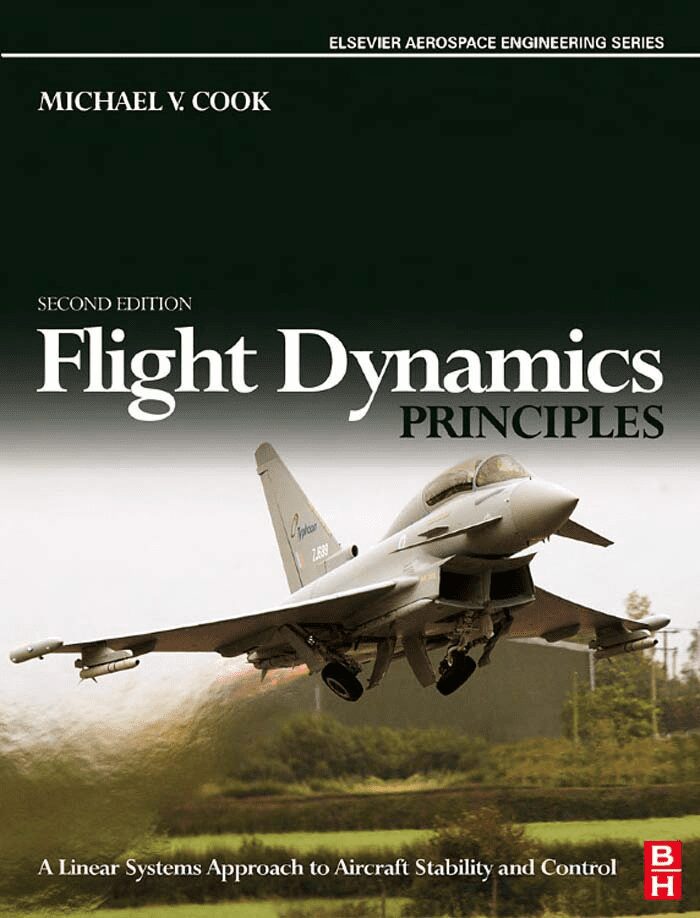
Descripción
Esta obra se presenta como una guía fundamental para cualquier persona que desee comprender los principios del vuelo y la dinámica de las aeronaves. Lejos de ser un manual técnico aburrido, este libro es una exploración integral de los conceptos teóricos y las aplicaciones prácticas que rigen el movimiento de un avión en el aire. La 2ª edición, en particular, se mantiene a la vanguardia, incorporando los últimos avances en el diseño de aeronaves y los sistemas de control de vuelo. Para un estudiante universitario en áreas como ingeniería aeroespacial, ingeniería mecánica o física, este libro es un recurso invaluable para construir una base sólida y desarrollar una comprensión profunda de cómo una aeronave, una de las creaciones más complejas de la ingeniería, se mantiene en el aire y se maniobra de manera segura y eficiente.
A lo largo de sus capítulos, el texto desglosa de manera metódica los grandes temas de la dinámica de vuelo. Se comienza con una exploración de los fundamentos de la aerodinámica, incluyendo el concepto de sustentación, arrastre y las fuerzas que actúan sobre un avión. El libro profundiza en el estudio de la estabilidad de la aeronave, tanto estática como dinámica, y se explican los principios que permiten que un avión se recupere de perturbaciones y mantenga una trayectoria de vuelo estable. Se abordan los desafíos de la maniobrabilidad y el control, y se discuten los principios de los sistemas de control de vuelo, incluyendo los sistemas de control de vuelo por cable y los sistemas de control de vuelo automático. La obra también se adentra en el análisis del rendimiento de la aeronave, incluyendo el despegue, el aterrizaje y la autonomía de vuelo, y se discuten las técnicas de modelado y simulación que se utilizan para predecir el comportamiento de una aeronave antes de su construcción.
La obra es invaluable por su enfoque práctico y la resolución de problemas. Cada sección incluye numerosos ejemplos y ejercicios que ilustran cómo se aplican los principios teóricos a situaciones reales. El libro se convierte en una herramienta activa para el aprendizaje, donde se fomenta la resolución de problemas para consolidar la teoría. Se promueve el pensamiento crítico, animando a los estudiantes a no solo memorizar fórmulas, sino a entender la lógica detrás de ellas y a tomar decisiones de diseño informadas. El autor utiliza un lenguaje claro y directo, haciendo que la materia sea menos intimidante. En definitiva, «Flight Dynamics Principles» es un recurso que te capacita para ser un profesional competente y seguro en el campo de la ingeniería aeroespacial.
- Preface / Preface to the Second Edition / Preface to the First Edition / Acknowledgements / Nomenclature
- Chapter 1. Introduction
- Overview
- Flying and handling qualities
- General considerations
- Aircraft equations of motion
- Aerodynamics
- Computers
- Summary
- Chapter 2. Systems of Axes and Notation
- Earth axes
- Aircraft body-fixed axes
- Euler angles and aircraft attitude
- Axes transformations
- Aircraft reference geometry
- Controls notation
- Aerodynamic reference centres
- Chapter 3. Static Equilibrium and Trim
- Trim equilibrium
- The pitching moment equation
- Longitudinal static stability
- Lateral-directional static stability
- Calculation of aircraft trim condition
- Chapter 4. The Equations of Motion
- Equations of motion for a rigid symmetric aircraft
- Linearised equations of motion
- Decoupled equations of motion
- Alternative forms of the equations of motion
- Chapter 5. The Solution of the Equations of Motion
- Methods of solution
- Cramer’s rule
- Aircraft response transfer functions
- Response to controls
- Acceleration response transfer functions
- The state-space method
- State-space model augmentation
- Chapter 6. Longitudinal Dynamics
- Response to controls
- The dynamic stability modes
- Reduced-order models
- Frequency response
- Flying and handling qualities
- Mode excitation
- Chapter 7. Lateral-Directional Dynamics
- Response to controls
- The dynamic stability modes
- Reduced-order models
- Frequency response
- Flying and handling qualities
- Mode excitation
- Chapter 8. Manoeuvrability
- Introduction
- The steady pull-up manoeuvre
- The pitching moment equation
- Longitudinal manoeuvre stability
- Aircraft dynamics and manoeuvrability
- Aircraft with stability augmentation
- Chapter 9. Stability
- Introduction
- The characteristic equation
- The Routh-Hurwitz stability criterion
- The stability quartic
- Graphical interpretation of stability
- Chapter 10. Flying and Handling Qualities
- Introduction
- Short-term dynamic models
- Flying qualities requirements
- Aircraft role
- Pilot opinion rating
- Longitudinal flying qualities requirements
- Control anticipation parameter
- Lateral-directional flying qualities requirements
- Flying qualities requirements on the s-plane
- Chapter 11. Command and Stability Augmentation
- Introduction
- Augmentation system design
- Closed-loop system analysis
- The root-locus plot
- Longitudinal stability augmentation
- Lateral-directional stability augmentation
- Pole placement method
- Command augmentation
- Chapter 12. Aerodynamic Modelling
- Introduction
- Quasi-static derivatives
- Derivative estimation
- Effects of compressibility
- Limitations of aerodynamic modelling
- Chapter 13. Aerodynamic Stability and Control Derivatives
- Longitudinal aerodynamic stability derivatives
- Lateral-directional aerodynamic stability derivatives
- Aerodynamic control derivatives
- North American derivative coefficient notation
- Chapter 14. Flight in a Non-steady Atmosphere
- Influence of atmospheric disturbances on flying qualities
- Methods of evaluation
- Atmospheric disturbances
- Extension of the linear aircraft equations of motion
- Turbulence modelling
- Discrete gusts
- Aircraft response to gusts and turbulence
- Chapter 15. Coursework Studies
- Assignment 1: Stability augmentation of the North American X-15 hypersonic research aeroplane
- Assignment 2: The stability and control characteristics of a civil transport aeroplane with relaxed longitudinal static stability
- Assignment 3: Lateral-directional handling qualities design for the Lockheed F-104 Starfighter aircraft
- Assignment 4: Analysis of the effects of Mach number on the longitudinal stability and control characteristics of the LTV A-7A Corsair aircraft
- Assignment 5: The design of a longitudinal primary flight control system for an advanced-technology UAV
- Appendices
- AeroTrim: A Symmetric Trim Calculator for Subsonic Flight Conditions
- Definitions of Aerodynamic Stability and Control Derivatives
- Aircraft Response Transfer Functions Referred to Aircraft Body Axes
- Units, Conversions, and Constants
- A Very Short Table of Laplace Transforms
- The Dynamics of a Linear Second-Order System
- North American Aerodynamic Derivative Notation
- Approximate Expressions for the Dimensionless Aerodynamic Stability and Control Derivatives
- Transformation of Aerodynamic Stability Derivatives from Body Axes Reference to Wind Axes Reference
- Transformation of Moments and Products of Inertia from Body Axes to Wind Axes Reference
- The Root-Locus Plot
- Index
Consulta los datos bibliográficos de esta edición para identificar correctamente el recurso, revisar su autoría y verificar detalles como ISBN, tema, subtema, archivo e idioma.
- Título: Flight Dynamics Principles
- Autor/es: Michael V. Cook
- Edición: 2da Edición
- Año de publicación: 2007
- Tipo de archivo: eBook
- Idioma: eBook en Inglés
- Editorial: Butterworth-Heinemann/Elsevier
- Páginas: 468
- ISBN-13: 9780750669276
- Subtema: Ingeniería Aeroespacial
Citar este libro
Preparando citaciones...


Aún no hay comentarios
Sé el primero en compartir tu opinión sobre este contenido.
Escribir un comentario